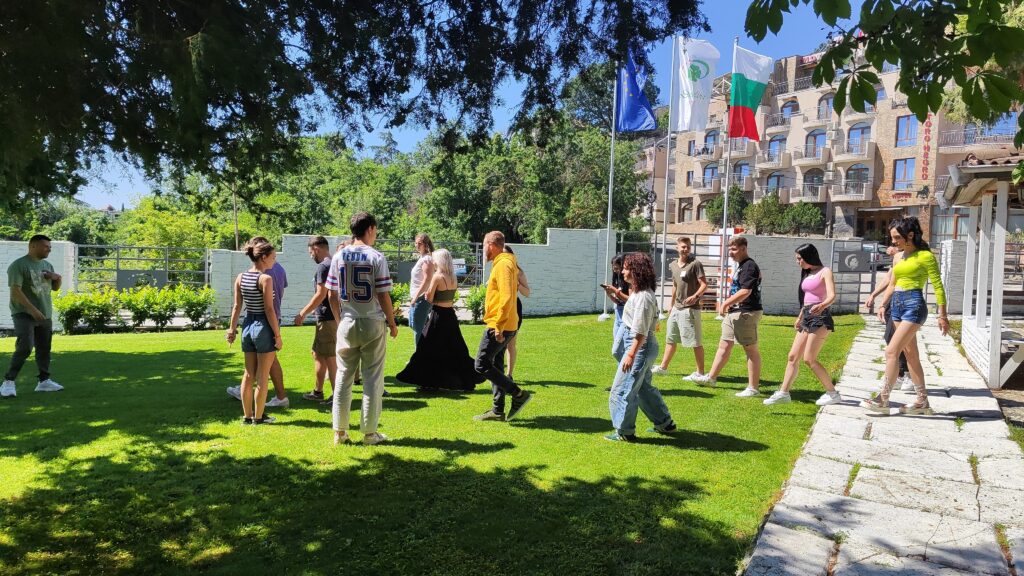
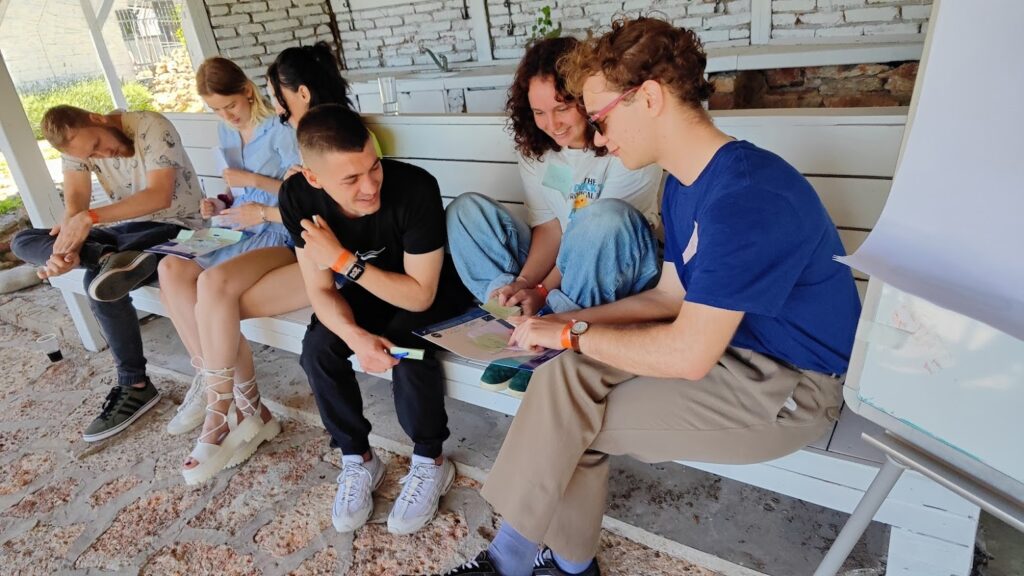
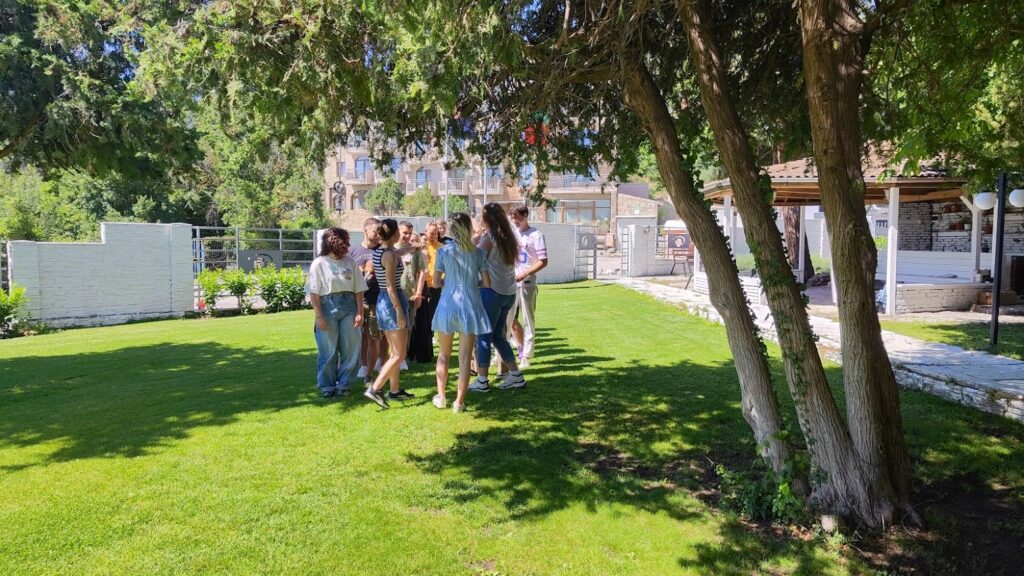
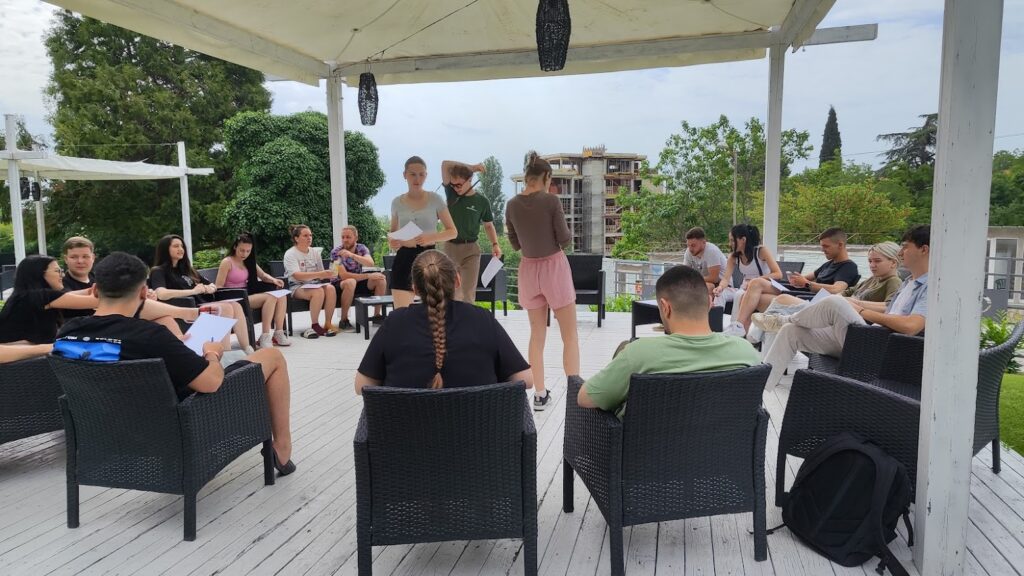
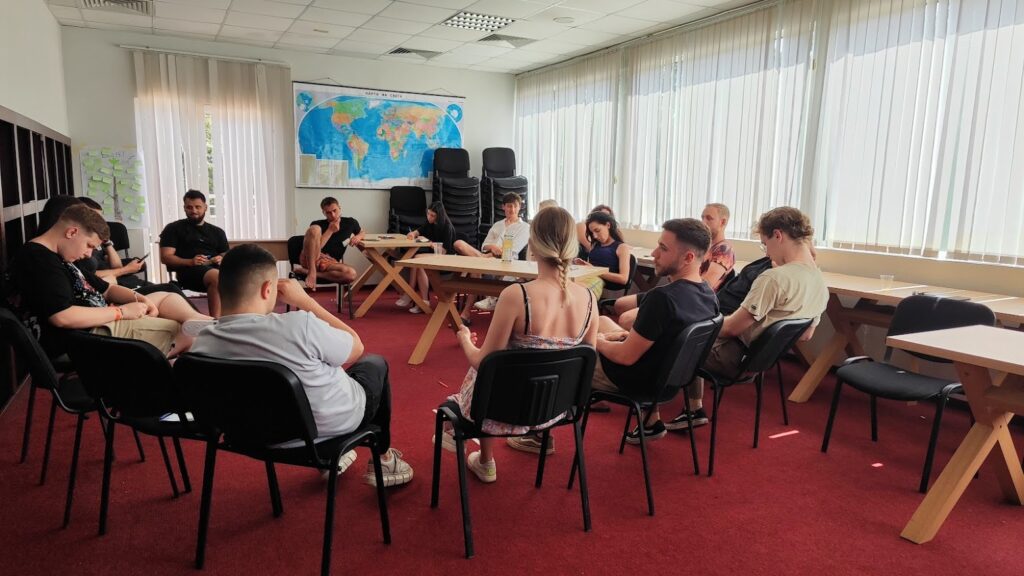
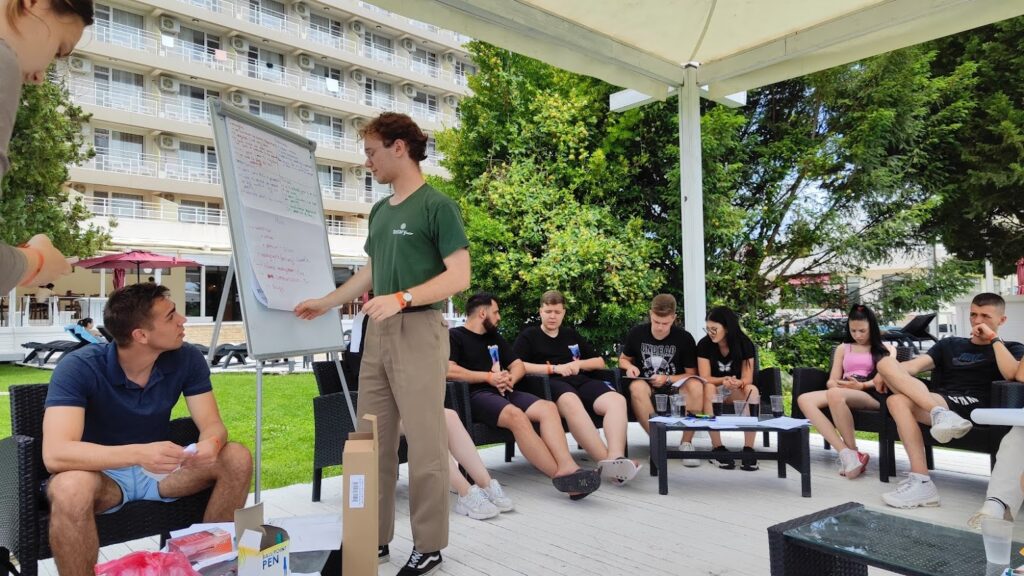
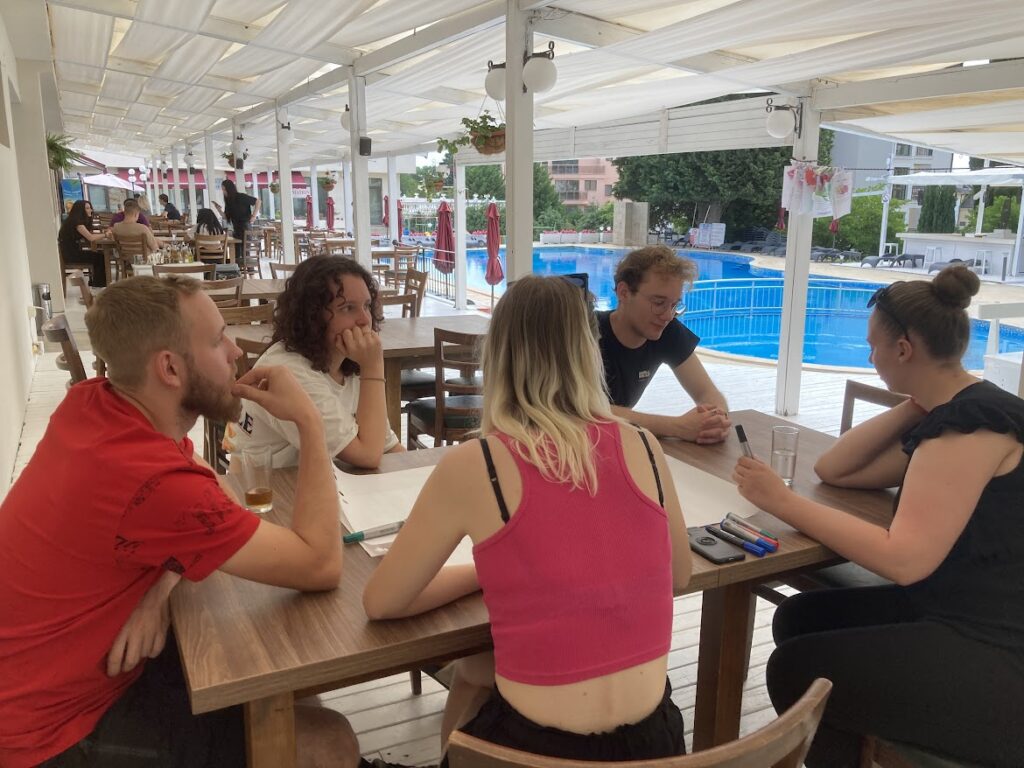
The first day of the activities program started with an ice-breaking session aimed at helping participants get to know each other. Later on, divided into groups they brainstormed on what entrepreneurship is and created group definitions. They were also introduced to the Youthpass certificate and its importance as a recognition tool. The end of the day was marked by a series of presentations about all partnering organizations followed by shared free time and collective outdoor activities.
On the second day of the project, the participants learned more about each other thanks to a group activity called “Who are I?”. Then they had to define the pros of working as an entrepreneur vs working a corporate job. The next activity “Think Green Cafe” enabled them to identify environmental issues and to generate business ideas to overcome the identified challenges. During the final activity, the participants had to film short group videos to show their representation of four different types of entrepreneurs.
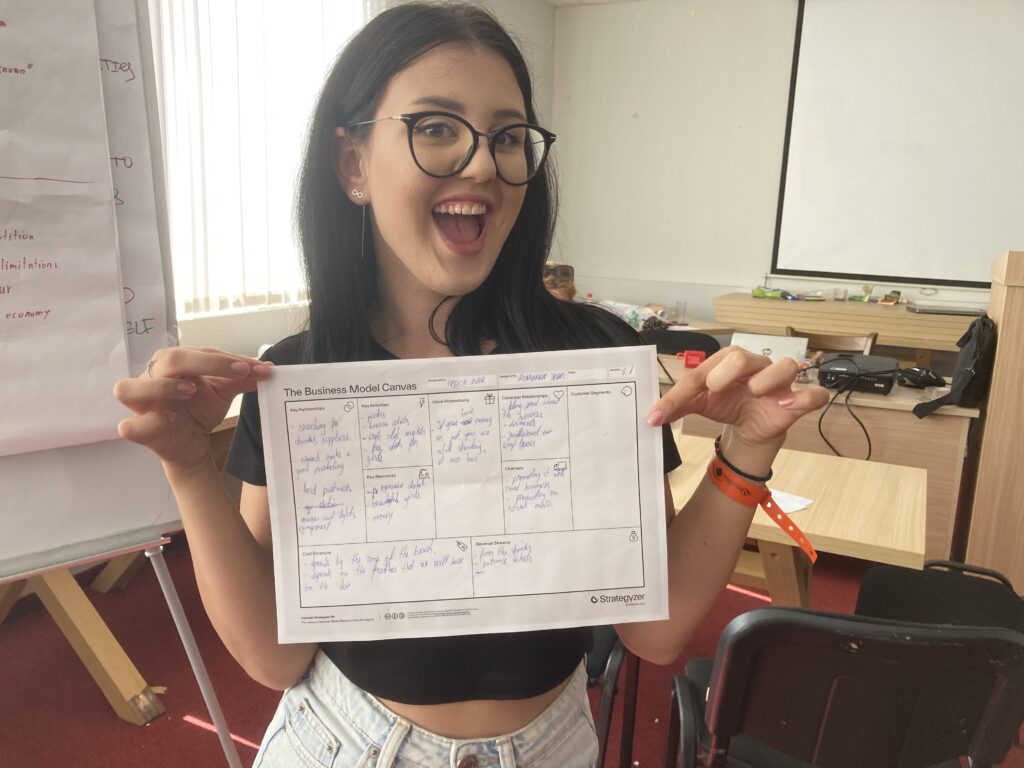
Day three started with collective exercises followed by a presentation of the elevator pitch method – a technique to present yourself, your ideas and demands in a short, direct and organized manner. The presentation of the elevator pitch was followed by individual introductions of all participants’ innovative business ideas. The next activity was focused on the SWOT analysis as a tool to determine the current market position of a specific business. In the afternoon the participants (in national groups) brainstormed on challenges their peers face and came up with entrepreneurial ideas on how to overcome these challenges (such as educational challenges and drug addiction) by using the business canvas model. The final activity allowed the participants to present their perceptions of the European Youth Goals Quality Employment for All, Quality Learning and Space and Participation for All by creating short promotional videos.
On the fourth day, the participants had to come up with group business ideas to support the aims of the mentioned EYGs. They were actively encouraged to create interesting visual materials to promote their ideas. The afternoon was marked by the Varna Adventure Game during which the young people discovered the city of Varna and introduced the young local citizens to the E(U)ntrepreneurs project.
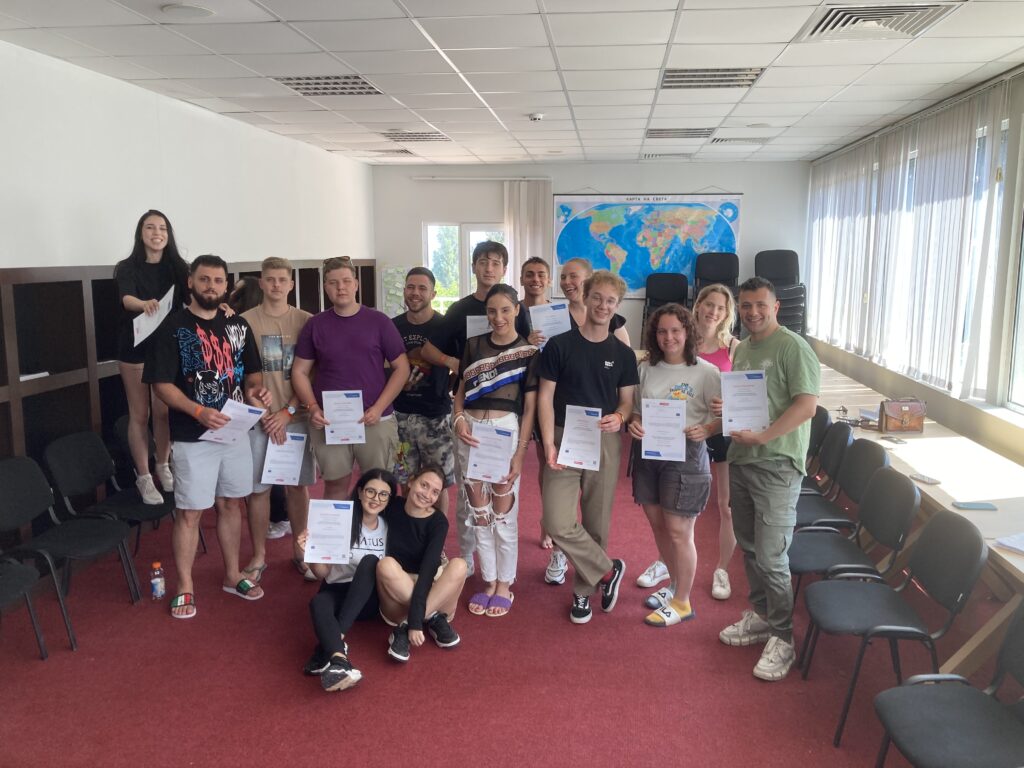
On the last activity day, the young people participating in the project learned more about the Erasmus+ Programme – its objectives, priorities and key actions. The final session motivated them to create sample projects on what they’ve learned about the Erasmus+ Programme. They came up with interesting ideas for initiatives aimed at different target groups. This activity was followed by a group reflection and a Youthpass award ceremony. In addition, two intercultural evenings took place during the E(U)ntrepreneurs project.
Venue: Varna, Bulgaria
Duration: 31 May – 6 June 2024
Countries Represented: Bulgaria, Romania, North Macedonia, Slovenia
Participants: Young people (18-30) from 4 European countries
The project is funded by the European Commission under the Erasmus+ program.
Funded by the European Union. Views and opinions expressed are those of the author(s) only and do not necessarily reflect those of the European Union or the European Education and Culture Executive Agency (EACEA). Neither the European Union nor EACEA can be held responsible for them.