
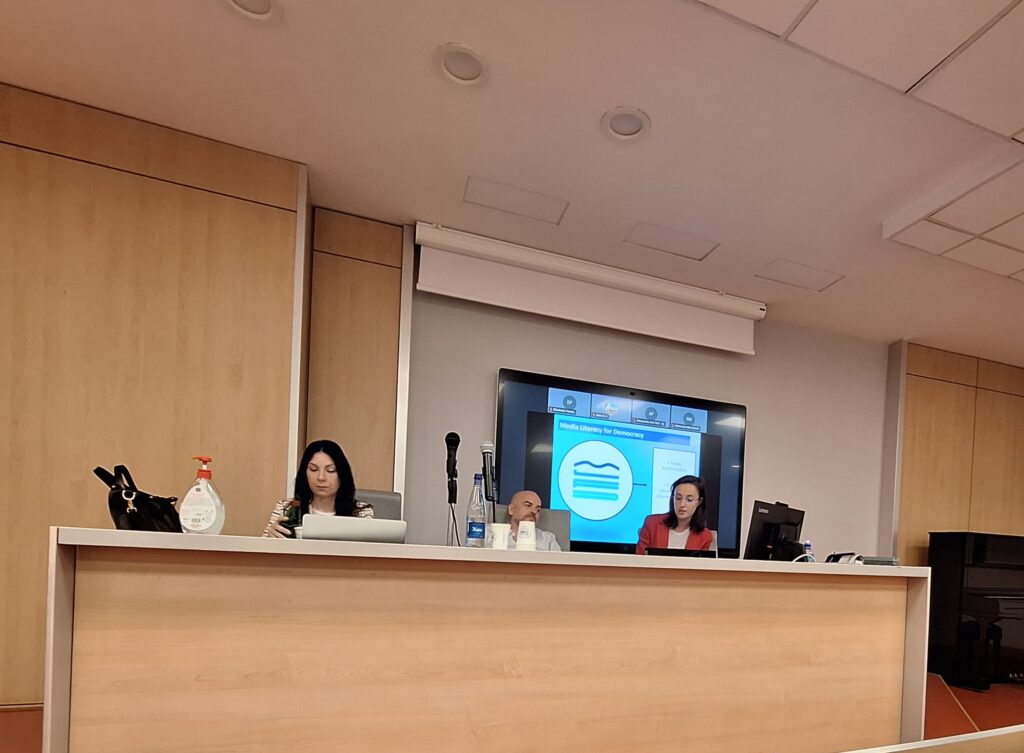
On 26 June, the first international workshop on Media Literacy for Democracy was held in Rome, organised by FIDU in collaboration with the MLFD Consortium and the Luiss Data Lab – School of Journalism. Through targeted media education for more conscious and active participation in the public debate, the event brought citizens, students, professionals, scientists, and colleagues from Italy, Spain, Bulgaria, Poland, and Ireland together to discuss the various factors that contribute to the spread of disinformation, policy initiatives and research currently underway, and possible strategies to promote the future of media literacy in the European Union and around the world. A panel of qualified and knowledgeable speakers communicated ways that we can raise awareness about disinformation, current techniques in tackling foreign interference, and the role of journalism in separating fact from fiction.
The workshop started with an introduction to the MLFD project, which focuses on the promotion of an effective media literacy strategy based on the multidisciplinary approach and on the cross-sector cooperation with the aim to tackling disinformation, empowering citizens to make informed decisions and protect democratic values. Eleonora Mongelli, Vice-President of FIDU and MLFD Project Coordinator, Alessandra Zini, Project Manager at FIDU and Gianni Riotta (video message), Director of the LUISS Data Lab and School of Journalism gave an opening speech and presented FIDU’s work in the field of media literacy.
Below you will find information on the guest speakers at the international workshop and some of the highlights of the discussions.
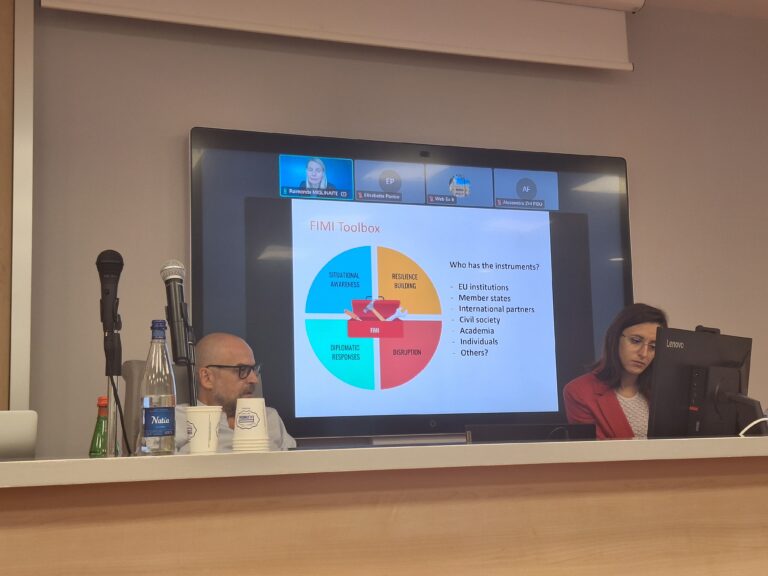
Raimonda Miglinaite, Information and Communication Expert with East StratCom Task Force as a part of EEAS, joined the conversation via Zoom with invaluable insight into the inside workings of the EU in challenging disinformation abroad, as well as the evolution of the EU’s policy framework and approach to the challenges of disinformation. She highlighted one of the most significant resources the EU has created to disseminate information to citizens and promote transparency in policy: the EU vs Disinfo website. This website shares information on how foreign actors abuse the power of information, as well as comprehensive threat reports and a Database full of thousands of instances of disinformation threats from foreign actors.
The role of journalism in the fight against disinformation was introduced by Cristiano Tinazzi, freelance journalist, and expert on conflict zones. He highlighted anecdotes about his time on the ground in Ukraine over the past two years and as a correspondent for a variety of Italian news sources.
Salvatore Custureri, project manager at IDMO, Italian Digital Media Observatory, presented his research on the regulation of social media platforms and tech companies in relation to data tracking and the spread of disinformation. The topic “Advertising fake news: supply-side dynamics of the fake new market” by Davide Bellucci, Post Doc Researcher at the University of Rome Tor Vergata, highlighted another aspect of the spread of disinformation that was enlightening for the workshop participants. The ongoing topic of the challenge of AI technologies led to a discussion on the presentation by Lorenzo Federico, Post Doc Researcher at Luiss Data Lab.
In conclusion, FIDU President Antonio Stango summarised the findings of the workshop, emphasised the need for an inclusive media literacy strategy in the EU and opened the discussion on the future work that needs to be done.
The subsequent phases of the Media Literacy for Democracy will bring this international conversation to a more diverse audience of EU citizens in Spain and Poland, furthering ideas about how to engage citizens with media-literacy techniques and the role of civil society, government, and the private sector in combatting mis- and dinformation in the EU.